Hidden
Corbera d’Ebre Old Town: Reading a Landscape Left by War
Visit Corbera d’Ebre’s interpretation centre and ruined old town in an order that preserves historical context, physical safety and respect.
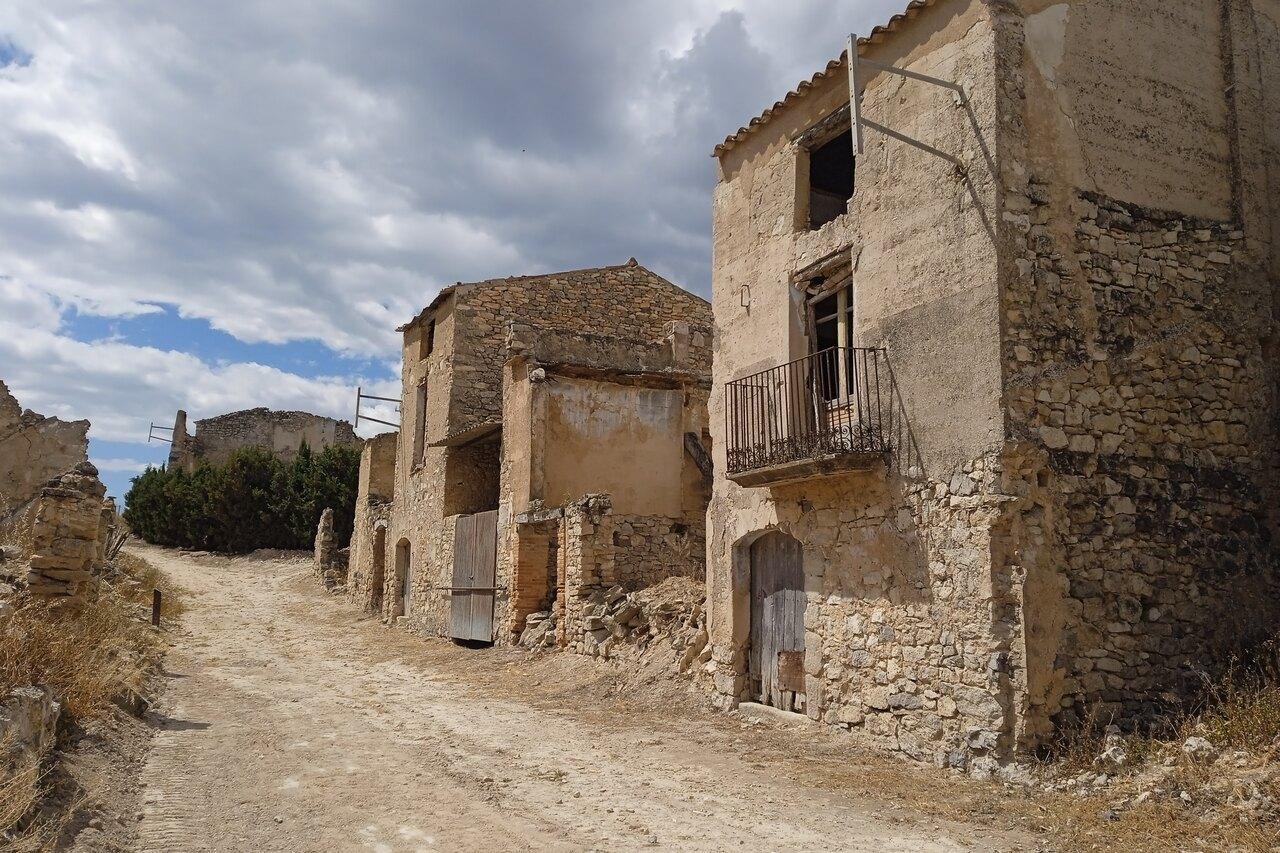
Begin in the modern town, at the 115 Dies interpretation centre, when its hours align with the Poble Vell. The centre supplies the military, political and civilian frame; the uphill ruins then show what bombardment, abandonment and reconstruction meant in one place. Reverse that order and broken walls can become dramatic scenery before they become evidence.
Corbera d’Ebre is not an abandoned village. People live in the rebuilt settlement below the hill. Use Poble Vell for the ruined old town and modern Corbera for the municipality around it. That distinction is basic respect and the key to understanding why the site exists.
Let 115 Dies establish the scale
The Centre d’Interpretació 115 Dies takes its name from the duration of the Battle of the Ebro. Its galleries move from the Republican crossing and the aims of both armies through combat, defeat, displacement and the later work of memory.
Give it 60–90 minutes. Do not treat maps and weapons as the whole story. Look for testimony, civilian movement, supply, medical care and the consequences that continued after the front moved. The centre’s final sections deliberately ask how a society remembers; those questions should accompany the walk uphill.
COMEBE publishes current hours and tariffs for both 115 Dies and the Poble Vell. When checked in September 2026, 115 Dies cost €4 general / €2 reduced, while the combined 115 Dies and Poble Vell ticket cost €5 general / €3 reduced; a wider one-year combined pass was €10. The two sites do not share identical weekly openings, so recheck the intended ticket and both schedules before departure, especially around winter holidays or special events.
Walk uphill into a destroyed town
The Poble Vell occupies the hill of la Montera above the current settlement. Republican forces entered Corbera at the start of the battle in July 1938, and the town remained under Republican control until early September. Francoist artillery and aerial bombardment left extensive destruction. After the war, the new settlement developed below while the damaged upper town was progressively abandoned.
Do not stop the story when the fighting ends. Residents still faced damaged homes, scarcity and the long process of establishing the lower town. This is therefore a landscape of aftermath as well as combat.
Move slowly enough to read street alignments, thresholds and changes in level. A collapsed house is not generic rubble; it once belonged to a neighborhood. Avoid entering unstable fragments, climbing walls or collecting stone, metal and pottery. What looks loose is still part of the site.
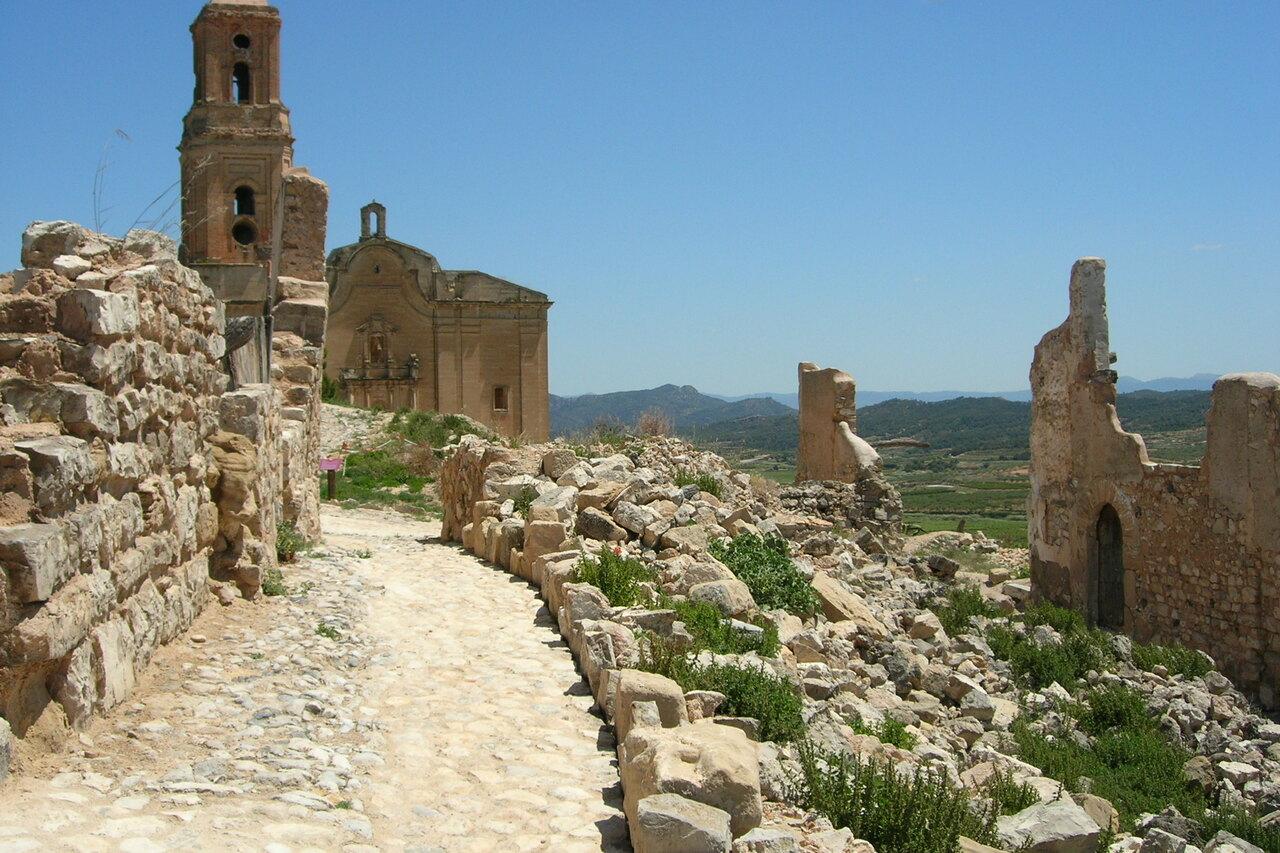
Use Sant Pere as a point of orientation
The roofed shell and restored fabric of the old church of Sant Pere provide a spatial anchor. The Generalitat’s Poble Vell guide identifies the church, the town circuit and the Abecedari de la Llibertat as central elements of the visit.
When the church or bell tower is open, follow the conditions attached to your ticket or guided visit. Do not assume every level is accessible on every day. Stairs and exposed viewpoints can be inappropriate in strong wind, extreme heat or for visitors with limited mobility.
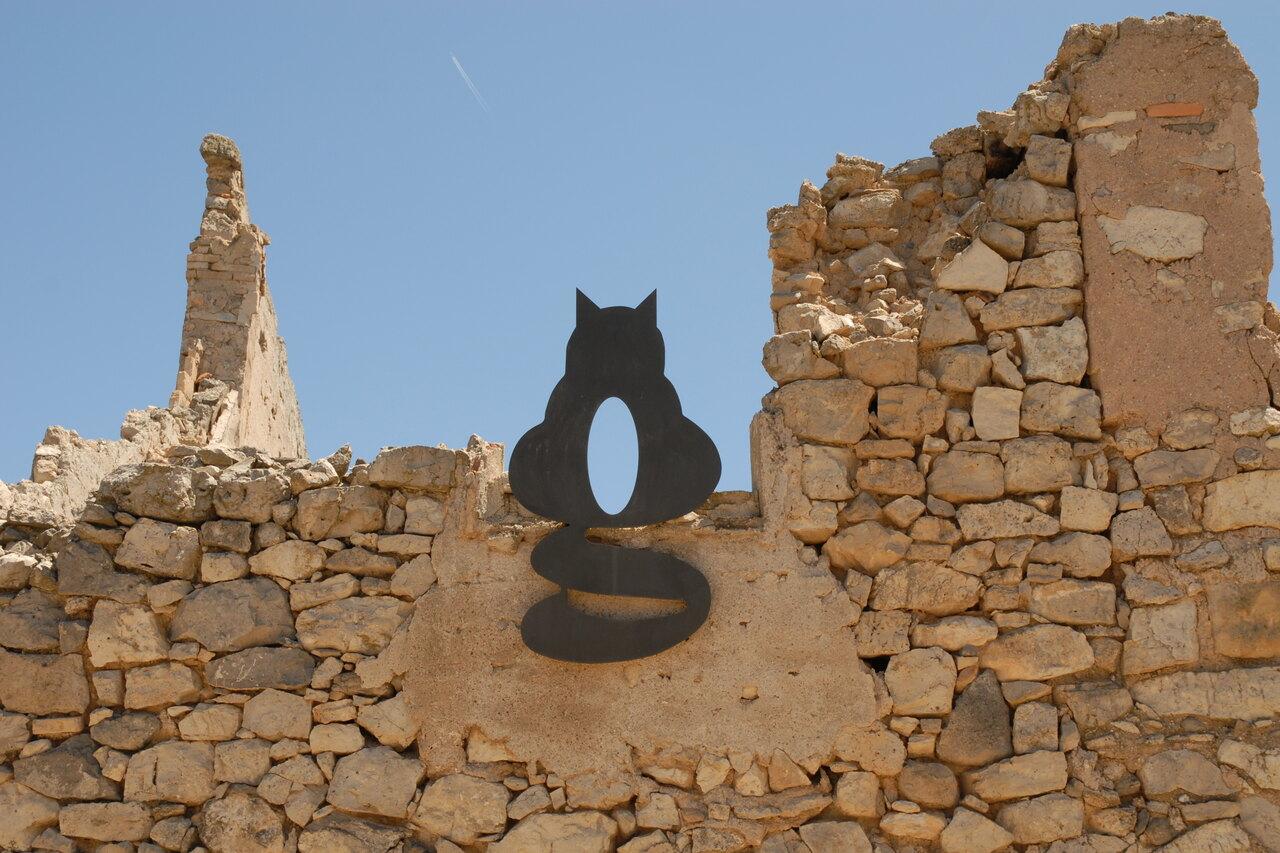
The Abecedari de la Llibertat places works by different artists through the ruined town, with texts connecting letters, language and peace. Treat it as a later layer of memorialization rather than decoration added to make the ruins photogenic. Ask how contemporary art changes the act of looking without replacing the historical remains.
Prepare for exposure, not distance
The circuit is compact, but it is not an effortless urban stroll. Expect slopes, irregular stone, limited shade and reflected heat. Closed shoes, water, sun protection and a slower pace matter more than the distance suggests.
In summer, use the first available morning period. Do not arrive at noon because the walk is “only an hour.” Terra Alta heat can make the upper streets punishing, while wind can increase exposure around the church and open edges. In rain, polished or loose surfaces require more care.
Visitors who cannot manage the full climb should ask staff what can be seen from the reception area or a shortened route. The interpretation centre below remains meaningful on its own. Accessibility should be confirmed with the site, not inferred from photographs of one paved section.
Photograph as a visitor to a memory site
Wide photographs can document how the old and new towns relate. Details of doors, wall scars and artworks can support attentive looking. Posed victory gestures, fashion shoots on ruins or moving objects for a cleaner composition do the opposite.
If other visitors are reflecting, grieving or taking part in a guided group, give them space. Ask before photographing identifiable people. A drone introduces safety, privacy and regulatory questions and should never be treated as an automatic entitlement over a memorial landscape.
Do not describe every hole or fractured wall as a bullet impact unless site interpretation identifies it. Damage can have multiple causes: bombardment, artillery, later collapse, material recovery and weathering. Precision is more respectful than dramatic certainty.
Keep lunch and another memorial in proportion
Allow three to four hours for 115 Dies, the transfer uphill, the Poble Vell and pauses. Eat in the modern town or another confirmed local establishment, respecting kitchen hours. The visit does not require a themed “battlefield lunch” or souvenir hunt.
If attention remains, the Memorial de les Camposines can extend the day through an official COMEBE site. Add it only after checking access and leaving time to absorb what you have seen. Racing through trenches and memorials to increase a site count works against the purpose of the network.
Families should explain the day in age-appropriate terms before arrival. The subject includes violence, death, displacement and dictatorship. Children need room for questions and a shorter route if concentration fades; the ruins should not become a playground while adults read panels.
When conditions make the ruins a poor choice
Choose 115 Dies alone during dangerous heat, strong wind, heavy rain or an unexpected closure. It gives the day a complete intellectual center and helps avoid forcing an exposed walk because of travel sunk cost. Ask about a guided visit on another date if the ruined streets are the main reason for coming.
The point is not to leave saying that Corbera was “frozen in time.” It was bombed, inhabited through hardship, partly dismantled, rebuilt below, protected and interpreted across decades. Reading all those stages is what turns a striking hill of ruins into a landscape of war, survival and public memory.
Related guides
- Vallferosa Tower and Torà: Planning a Remote Heritage Visit
Reserve Vallferosa Tower before taking the rural detour, prepare for its uneven approach and use Torà as the day’s reliable heritage fallback.
- Cercs Mines: An Industrial-Heritage Day in Berguedà
Plan the Sant Corneli mine-museum visit around its underground sequence, colony history, access limits and a worthwhile above-ground fallback.
- Ullastret Iberian Town: Reading the Archaeological Site
Read Ullastret’s Iberian walls, cisterns and settlement remains with a sensible visit order, current admission and practical access advice.
Are you in the know?
Receive new articles, local updates, and occasional offers from selected partners. We never share your email address. Unsubscribe at any time.
By subscribing you agree to our privacy policy.