Hidden
Ullastret Iberian Town: Reading the Archaeological Site
Read Ullastret’s Iberian walls, cisterns and settlement remains with a sensible visit order, current admission and practical access advice.
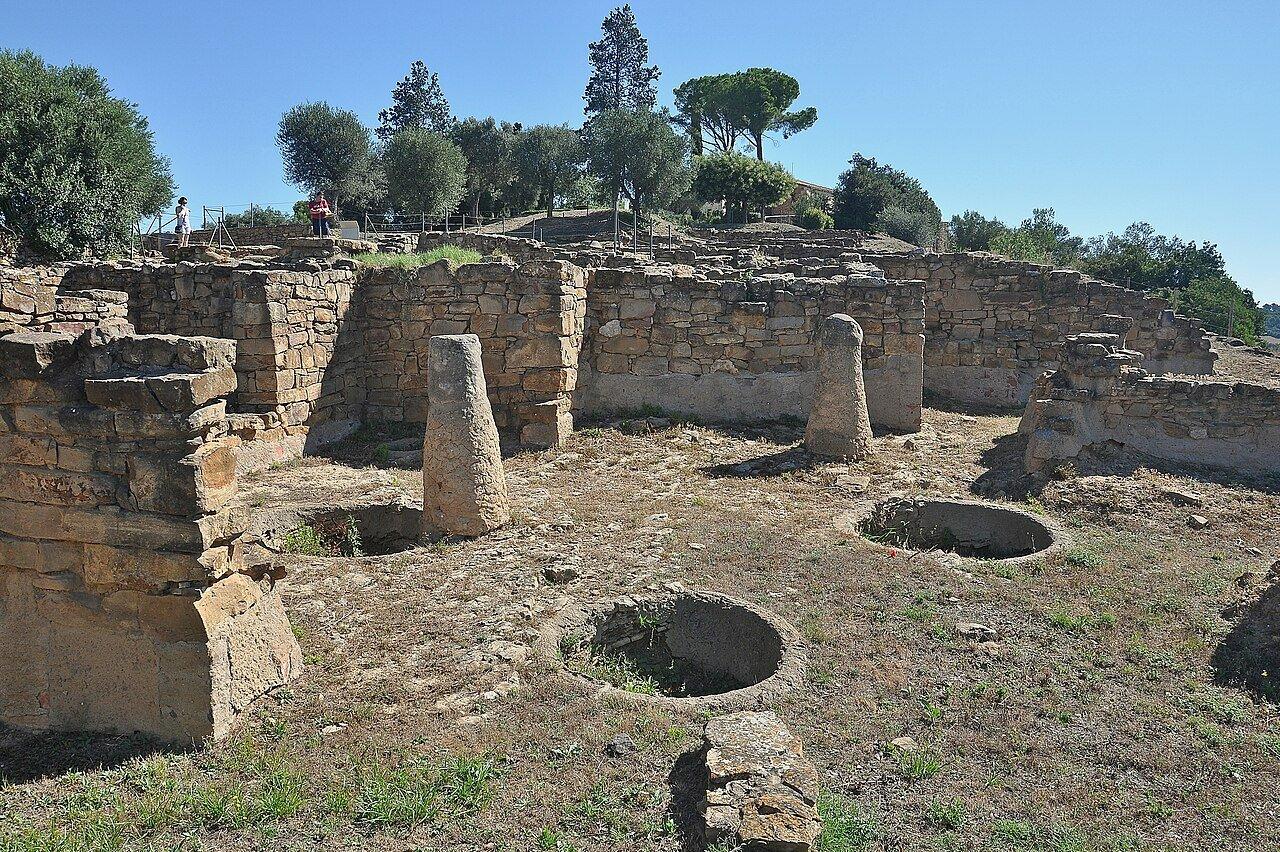
At Puig de Sant Andreu, Ullastret survives in defensive walls, room outlines, cisterns and storage pits. A site plan helps turn those remains into a town. Leave time for the museum and audiovisual as well as the outdoor circuit; the modern village of Ullastret is a separate stop for lunch.
At a glance: drive to MAC Ullastret, Afores s/n, Puig de Sant Andreu; allow 90 minutes to two hours for the site and museum, followed by an optional village lunch. General admission is €7, including the archaeological area, museum, audiovisual and individual audioguide. Budget €25–40 per adult for entry, a modest lunch and refreshments, excluding transport. Choose an early visit in hot weather and confirm opening before leaving.
Start with the wall, then imagine the town
The Catalan Heritage Agency’s Ullastret guide describes a two-settlement complex and identifies the walls, six round towers, houses, cisterns and temples visible at Puig de Sant Andreu. Begin at the defensive perimeter, then trace the streets towards domestic and shared spaces.
Take the supplied site plan and identify your position before walking away from reception. A low wall can be difficult to interpret in isolation; on the plan, it may become a room, a street edge or a boundary within a larger building. Pause at the principal defensive remains, then follow the visitor route into the settlement rather than crossing directly over the masonry to the next viewpoint.
Keep to the visitor route and use designated seating. The surviving walls include conserved archaeological fabric and should not be climbed or used as benches.
Cisterns make daily life easier to understand
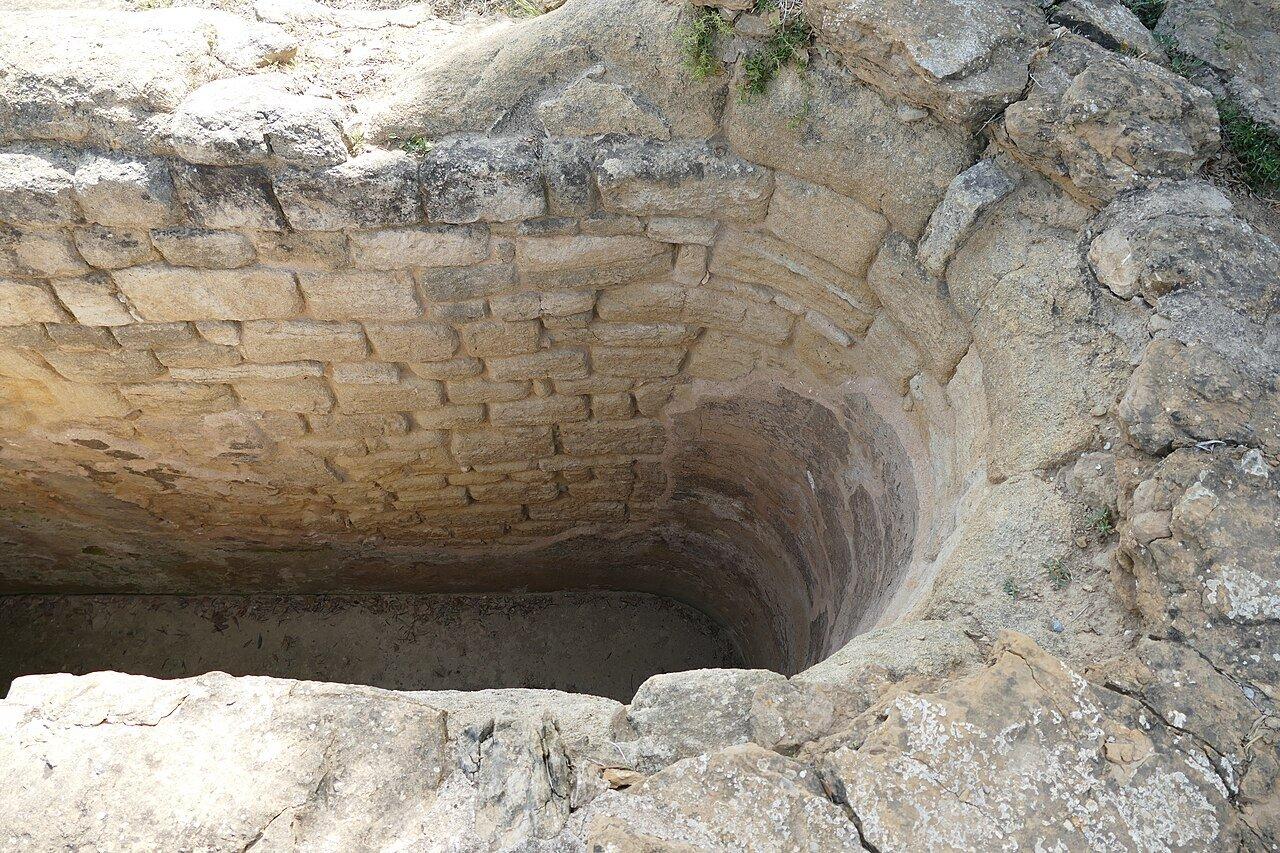
Water storage is one of the clearest ways to move beyond the idea of an ancient town as a collection of impressive ruins. At the cisterns, think about collecting, protecting and sharing a supply through dry periods. The museum's interpretation helps distinguish these installations from grain-storage features or ordinary excavated spaces.
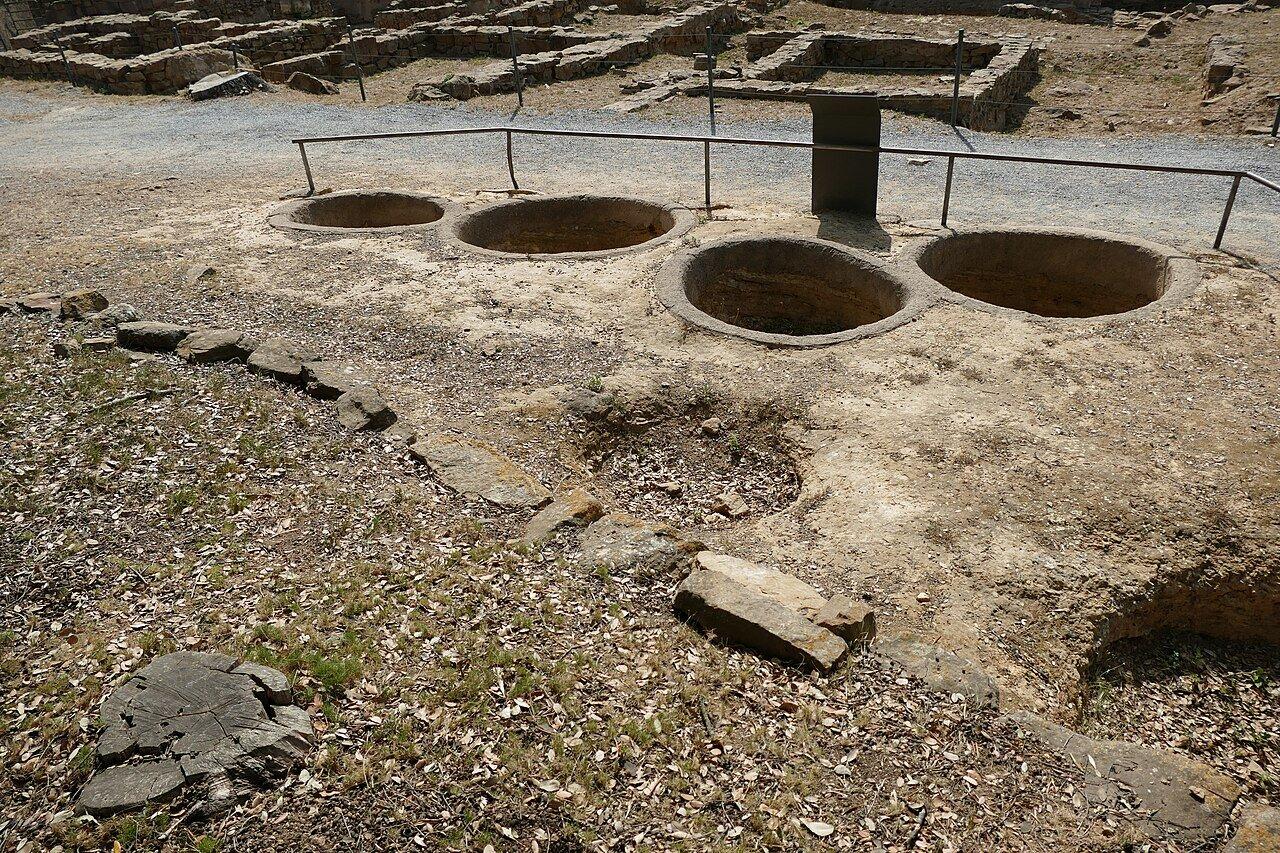
Use the labels to distinguish cisterns from grain-storage pits. Their forms can look similar at first, but each tells a different part of the story of feeding and supplying the settlement.
With children, give the walk three concrete tasks: find a defensive feature, find something connected with water, and find an outline that suggests a room. The challenge is to explain how they recognised each one. Keep the route short enough that the museum still receives attention at the end.
Use the museum to test what you imagined
The indoor displays and audiovisual belong to the visit, not merely to a rainy-day contingency. They help connect the site to objects and a wider settlement landscape that cannot be understood from surface remains alone. Leave 30–45 minutes for this part, adjusting to the day's audiovisual arrangements and the group's reading pace.
Ask which audioguide languages are available. After the reconstruction, compare the positions of buildings with the wall lines outside; it helps separate the surviving evidence from the interpretation.
Ask at reception if any display or audiovisual service is unavailable so you can divide your time between the site and museum.
Ullastret's hours and terrain shape the booking
The official visitor information lists €7 general and €5 reduced admission, with free entry for under-16s and other eligible visitors. It gives Tuesday–Sunday opening from 10:00 to 20:00 in June–September and 10:00 to 18:00 in October–May, with Mondays closed. Confirm holiday exceptions and last-entry arrangements for your actual date.
The outdoor paths have uneven surfaces, exposure to sun and changes in level. Ordinary pushchairs and wheelchairs may not manage the entire archaeological circuit. Contact the museum about a specific accessible route rather than assuming that free admission for a disability category means every area is physically accessible.
Carry water, a hat and shoes with grip. After rain, take extra care on stone and sloping ground. If the day is exceptionally hot, shorten the outdoor circuit and concentrate on the museum; if the whole site is closed for weather or another reason, move the visit to a different day. There is no useful substitute in walking around the fence.
Keep the village lunch separate from the ruins
Allow a short drive between the archaeological site and the modern village, then park in a permitted area and walk in. Reserve a weekend lunch if you want a particular restaurant. An editorial €18–28 per person is a starting meal allowance, with drinks and an elaborate menu increasing the total.
Without a car, plan the final connection explicitly. Nearby bus destinations do not guarantee a service to the archaeological entrance; a prebooked taxi with a fixed return may be necessary. Check public transport through Mou-te and obtain the taxi quote before deciding the day fits your budget.
For a first visit, the site, museum and village lunch make a full enough Empordà outing. Give the archaeological circuit the cooler part of the day and leave the afternoon table unhurried.
For a driving day from Girona, compare Girona car hire and include collection, fuel and the return deadline in the outing. A booked car gives flexibility between the ruins and lunch, but does not change the site’s opening hours.
Related guides
- Capellades Paper Mill Museum: A Hands-On Heritage Day
Visit Capellades’ working paper heritage through a guided museum tour, optional workshop and Bassa walk, with prices and arrival advice.
- Tivissa and Castellet de Banyoles: An Iberian Half-Day
Visit Tivissa before the Iberian city of Kum, with the reservation, road access and exposed archaeological terrain planned honestly.
- Isona Dinosaur Day: Museum, Geosites and Footprints
Build an evidence-led dinosaur day around Isona, its museum, one official geosite, realistic driving, family pacing, and weather.
Are you in the know?
Receive new articles, local updates, and occasional offers from selected partners. We never share your email address. Unsubscribe at any time.
By subscribing you agree to our privacy policy.